Daily Audio Newscast - August 25, 2026

© AlexLMX - iStock-823000260
Six minutes of news from around the nation.
In a divided decision, the US Supreme Court allows Trump to proceed with a plan that would allow the Postal Service to decide which votes will be accepted; Southeast Oregon groups aid farmworkers smoked out by wildfires; New Jersey legislators pick fight with Big Tech to protect kids online; A new report finds TikTok's GLP-1 gray market unsafe for consumers.
TRANSCRIPT
The Public News Service Daily Newscast, August 25th, 2026.
I'm Mike Clifford.
It is a reprieve for the Trump administration, if only temporary.
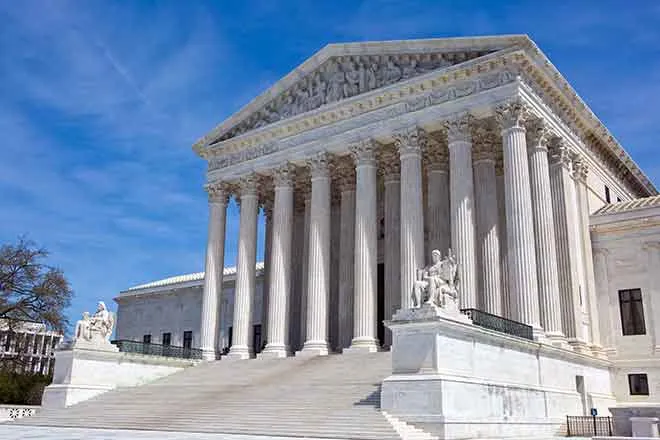
A divided Supreme Court Monday allowed the Trump administration to move forward with plans to restrict mail-in voting before the midterm elections.
The New York Times notes, in an emergency order, the justices said President Trump could proceed with implementing an executive order he had signed, which directed the U.S. Postal Service to help decide which voters should receive mail-in ballots.
It remains unclear whether the White House rules will be in effect for a fast-approaching midterm election in which the control of both chambers is at stake.
Additional legal action is a near certainty, with the plan's fate not yet final.
Meantime, as climate change-fueled wildfires continue to burn in southeast Oregon, groups are organizing to support some of the state's most impacted residents, farm workers.
The drier side of the state has endured weeks of persistent wildfire smoke and air quality advisories since July.
Eddie Melendrez with Oregon Food Bank has been supplying masks, sun protection, water and other resources to farm workers in Malheur and Harney counties.
He says the need is great.
What we're seeing is that our essential workers continue to work even when there's smoke or there's fire.
But we've heard concerns from even the field workers on their physical health, their respiratory health, how it impacts them being out there in the long days, in the sun, in the smoke.
Melendrez says while field workers continue to get their work done despite the conditions, the increase in fires and changing climate conditions may soon hit the food supply and raise prices.
But he adds that extreme heat and fires have become more common in the last few years and people are learning to be more prepared.
I'm Isobel Charle
People in southeast Oregon are more likely to experience food insecurity than in other parts of the state.
And New Jersey is taking its fight over children's online safety straight to big tech.
Governor Mikey Sherrill recently signed three bills aimed at protecting kids from addictive social media, strengthening privacy protections, and giving parents tools to keep young people safe online.
The legislation builds on Sherrill's Office of Youth Online Mental Health Safety and Awareness, which she created on her first day in office.
Cheryl says the federal government has failed to act on online safety, so New Jersey is taking steps to fill the gap.
With these bills, New Jersey is putting real protections in place for our kids online and giving parents real backup.
So they're not fighting this battle alone.
Accountability starts now.
One bill, the New Jersey Kids Code Act, requires certain online service providers to build platforms with minors' safety and well-being in mind.
The others establish a social media research center at a major state university and direct a study on social media warning label.
Major federal social reforms remain stalled in Congress due to heavy big tech lobbying and disagreements over how to restrict the activities of minors online.
I'm Mark Richardson.
This is Public News Service.
The combination of GOP-1s taken for weight loss and social media could be putting the lives of women at risk.
A study by Ultraviolet found multiple companies on TikTok selling unregulated fake products in what they call the GLP-1 gray market.
Gray markets operate outside of authorized distribution channels and may offer counterfeit products.
Texan Victoria Schmidt says she ordered two separate GLP-1 patches from the TikTok shop, and each time she received the wrong product.
Schmidt didn't use the patches and warns women to be careful.
When I first started this journey, every other ad was GLP-1 shots or the patches.
I was excited because I saw all these people that were like showing before and afters and how they lost all this weight and it was so great for them.
Ultraviolet's report shows Schmidt is not alone.
The group studied more than 200 TikTok accounts that promoted the sale of unregulated GLP-1 drugs and found that most of them target middle-aged women.
I'm Frida Ross reporting.
And a significant number of people living with diabetes could lose Medicaid coverage due to work requirements and cost-sharing changes, according to data from the American Diabetes Association.
Our Nadia Ramlagan has more.
Diabetic Mountain State residents could end up paying up to $1,000 more out of pocket each year for basic medications and care.
Lisa Murdoch, chief advocacy officer for the association, says that will cause people to drop coverage or reconsider their insurance plan.
Studies have shown that even modest cost sharing impairs a person's access.
We're not talking about one medication.
We're talking about multiple medications and complex needs.
She adds that Medicaid enrollment and insurance coverage status are the greatest predictors of a person's ability to manage their diabetes effectively.
Without it, Murdoch says the most vulnerable populations will end up in hospital emergency rooms.
Finally, the Trump administration is doubling down on efforts to open up more of the nation's public lands to extraction industries.
Plans to repeal the 2001 roadless rule come on the heels of the Department of Interior's new review of how wilderness areas are to be managed.
Kelsey Yarzab-Yates with the Sierra Club's Wyoming chapter says these moves put millions of acres of Wyoming's critical wildlife habitat and outdoor recreation areas at risk.
She says Wyomingites don't want to see their favorite places to fish, hike, and hunt, clear-cut, drilled, or mined.
Here in Wyoming, we are uniquely exposed because none of the lands under review are permanently protected.
And that includes wild country right on the doorstep of Yellowstone and Grand Teton National Park.
I'm Eric Galatas
This is Mike Clifford for Public News Service.
Member and listener supported.
Find our trust indicators at publicnewsservice.org. shoot him.