Drought conditions worsen across New Mexico, West

Record-breaking July temperatures have left nearly 95% of New Mexico in some degree of drought, according to a new outlook from the National Oceanic and Atmospheric Administration, and “isolated” monsoon rains failed to provide meaningful relief to water supply challenges across the West.
The outlook, released Thursday, monitored the status of major reservoirs across the Colorado River and Rio Grande basins, noting that many have reached historic lows, including Lake Mead and Lake Powell.
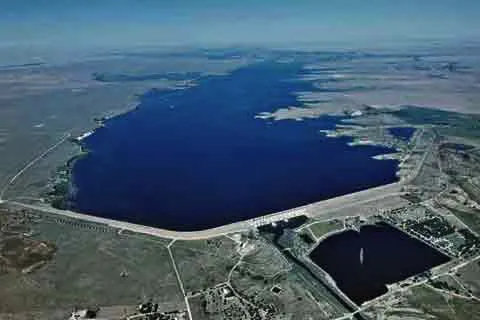
New Mexico’s Elephant Butte Reservoir remains at 1.4% of its capacity, prompting state officials earlier this month to close the lake’s main boat ramp due to safety concerns.
Conditions will improve through November, officials said Thursday. While an uptick in monsoon rains will not “fully eliminate drought and its impacts,” forecasters predict a 90% chance of a “very strong” event triggered by a strengthening El Niño, potentially creating wetter conditions across the Intermountain West this fall.
NOAA’s previous outlook in early July was more optimistic about the potential for significant monsoon rains across the region this summer. But the forecast released Thursday noted that New Mexico instead experienced its second-warmest July on record, and the eastern part of the state “continued to dry out” without receiving any significant precipitation.
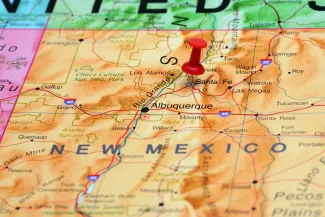
The administration’s drought map shows that 3% of New Mexico is in “severe drought,” namely Albuquerque, Santa Fe and parts of the northeastern corner of the state. About one-third of the state, predominantly in northern New Mexico, is suffering from “extreme drought,” the map shows.
The outlook notes that conditions are unlikely to improve over the next two weeks, with all but the northern and western edges of New Mexico facing 100% probabilities of above-average temperatures.